Sunday, 20 November 2016

Sweet and Sour...Beijing Style


While teaching in Japan, I found myself with some summer vacation and decided a trip to China would be intriguing. I wanted to see the Great Wall and other attractions, while experiencing a different culture. The Lonely Planet states, China isn't a country-it's a different world.  I imagined Beijing (Peking) steeped in history while being a westernized, modern capital with plenty of English speaking people. My sister Bobbie was on board so we obtained the required visa, bought our tickets and headed for a new adventure.

Visiting China in mid-August was maybe not the most ideal plan. We stepped out of the airport into a wall of heat. Within seconds, our shirts were drenched in sweat. We walked to the taxi stand but no one seemed willing to take on our fare. Finally a vision in knock-off Versace approached us. After negotiating a price, we hopped in and began the most hellish and frightful ride of our lives. Our driver although stylishly dressed, drove incensed, with one hand on the horn and the other balled into a fist, yelling at anyone or anything around him. With 300 million bicycles in this city, I had no idea how he was able to navigate the streets. Fortunately we made it to our guesthouse unscathed. After checking in, we met some other guests, enjoyed a delicious meal of sweet and sour pork, and settled in for a good night's sleep.

The first place we wanted to visit was the Great Wall. The manager at the guesthouse suggested going to the most visited section of the Wall, Badaling. There was a tour group complete with an English speaking guide and this sounded perfect for us. Since we had to take public transportation, we had the manager write down all instructions in both English and Chinese. Bobbie and I were both Girl Scouts in our younger years and learned the most valuable lesson: be prepared. We hit the busy streets with our bottled water, backpacks and cameras.

Arriving at the bus depot, we located a bus with #1 on it as per our instructions. We then noticed there were a couple of other buses with #1 and we tried comparing the writing on the bus with the writing on our paper. A bus driver noticed our perplexed expressions and approached us. We showed him our paper and he nudged us towards the steps of his bus. We hopped on and headed towards the back to the only available seats. We were greeted with a number of smiles and Ni Hao's  (pronounced knee howhello in Chinese). After finding seats and looking around, we started to panic, realizing we were the only foreigners and must be on the wrong bus. As I stood to make my way to the front, the driver closed the door, stepped on the gas and peeled out of the depot, throwing me back into my seat. Apparently he and the taxi driver attended the same driving school.

Within a couple of minutes, a frazzled looking woman with a megaphone and clipboard stood at the front of the bus and began bellowing in a high pitched voice. The guide was Chinese, not an English speaker as I was hoping. Everyone on the bus quieted down and listened to what I could only presume was information about a tour. Soon everyone started digging in their bags for their wallet. I noticed a lot of name brands and made a mental note to do some shopping on this trip. When the guide made her way to the back of the bus, she wrote down what we owed on a piece of paper. I asked, "Badaling, ok?" and she nodded and pointed at the total. It was more than what we were told at the guesthouse but not by much, so we handed her the money. In turn, we got buttons to pin to our shirts so they would be able to identify us for the duration of the tour. I didn't think the button was necessary (it was pretty obvious we stood out in this group) but we put them on anyway.

After we drove for a while, we pulled into a parking lot filled with other buses and the guide made some sort of announcement. Looking out the window, I could see the Great Wall. This is the most famous feature of China and the symbol of the nation. Built in 206 BC, it spans over ten provinces, and is almost 22,000 km in length. Just as I was about to disembark the bus, the driver grabbed my arm and wrote down a time on a piece of paper, then gestured to the bus. I assumed he wanted us back at the time, so I smiled, gave a thumbs up and followed the rest of the group towards the Wall.

  
The Great Wall
 We didn't have much time  at this location, and as we  made our way to the      entrance,  we wondered  how we could climb it  before the bus departed.  Luckily  there were  signs in  English,  and it  was swiftly  determined this  wasn't the  Badaling section  of the  Wall. After taking  some  pictures and  exploring,  Bobbie and I  headed  back  to the bus  with  a few  minutes to  spare. The  driver  pointed to his Rolex (seriously, we had to do  some shopping) and gave us a thumbs up. We smiled and headed to our seats, pleased we  made it back to the correct bus on time. Our fellow passengers smiled back at  us, seemingly happy the two white girls didn't get lost and wouldn't be stranded.


Our next stop was Badaling, and we were given a couple of hours to climb the Wall. It was extremely hot and we were promptly drenched in sweat. The temperature was hovering around 39°C and we bought bottles of frozen water which melted in seconds. It was a steep climb but there were handrails to hold onto. Perhaps this is why Canada's pop singer/douchebag Justin Bieber had to get a lift on the shoulders of his bodyguards when visiting the Wall. There is a cable car and pulley available for those that need it. The Badaling section of the Wall has visitors in the millions each year, likely due to the incredible views.

The Great Wall: Badaling
If you look closely, you can see the tour
button on my shirt.
After a couple hours, we returned to the bus and after a short drive, we arrived at an amusement park and aquarium. The driver indicated we had an hour and a half to enjoy this part of the tour. This trip just kept getting better. We enjoyed the rides with the kids from the bus and toured the aquarium. After drinking so much water, my sister and I headed towards the public restroom.

After paying the equivalent of 5 cents for a square of toilet paper, we stood in line and waited our turn. Heading inside, we were immediately overpowered by the pungent stench. When our eyes adjusted to the dimly lit room, we saw women lined up, squatting over what can only be described as a trough. It was startling to urinate in a line-up, but looking down and watching excrement and urine floating by, was another matter entirely. I was used to squat toilets in Japan but I was also used to privacy. A door or separate stall would have been welcome. Bobbie and I made a pact to hold it until we returned to the guesthouse with it's western style toilet.
A picture of the washroom was too disgusting to post
(Google it if you dare). I felt this eloquent sign was best. 
Make sure to bring sanitizer-or a hazmat suit!

Getting back on the bus, we figured our tour was coming to an end. It was close to dinnertime and I was craving some sweet and sour pork. However, our day wasn't quite done. The next stop was at a jade and jewelry shop, where we were given 45 minutes to peruse and make some purchases. I had no interest in this part of the tour so sat under a tree and relaxed. After the shopping, we made one final stop at a house/museum of a famous deceased person. There was no English during this portion of the tour so my sister and I just walked around trying to look interested.

Finally, we headed back to the bus station. Bobbie and I shook hands with the driver and some of our group members, smiling while saying xie xie which is thank you in Chinese. We then boarded another bus that took us back to the guesthouse. Describing our tour with some fellow travelers in the lounge that night, they thought it sounded much better than the English-guided one. I have a feeling our driver was surprised but pleased to find some Australians and a couple Brits on his bus the next day.

Bobbie and I at the
Summer Palace
Tiananmen Square-the largest
city square in the world. If looking
for Mao souveniers, this
is the place for them.
 For the duration of the trip, my sister and I  became more at ease despite little English being spoken. We ordered at a restaurant with no English on the menu, took buses and rickshaws around the city, bartered while shopping, and toured some of the best parts of Beijing. We visited Tiananmen Square, the Forbidden City, the Summer Palace, the Temple of Heaven, and of course, the lively outdoor markets.
The Temple of Heaven


We came across a Kenny Rogers Roasters while walking around the city one day. The sign boasted "Deliciously Healthy" so we went in to check it out. Having already seen McDonalds and Starbucks across from Tiananmen Square, this Western attraction didn't surprise us. Photos of Kenny donned the walls and his music videos played on a loop from t.v.'s around the restaurant. Apparently this is a popular franchise across Asia. Go Gambler


On our last night, we took in "The Flying Acrobatic Show" at the Chaoyang Theatre.


The Beijing Acrobatic Troupe is a group of highly skilled, trained acrobats and circus performers. There were contortionists, high-wire acts and stunts. There were also quite a few people balancing on one bicycle!


Chinese acrobatic tradition goes back centuries and is one of the few art forms that was condoned by Mao.

We were completely spellbound and sat mesmerized during the entire show. It was the perfect end to a wonderful vacation.


Visiting this magnificent city showed me a glimpse of a different culture and way of life. Even though I was ripped off by a couple of drivers, thought I would perish while riding around the city, entered the men's washroom instead of the women's (no sign on the door), I was able to take it all in stride. I vowed never to take for granted a western style toilet, the abundance of toilet paper we have at home, and the English language. I became a master at gestures and smiling and saying thank you. A simple smile and thank you goes a long way, no matter where you travel. Although the visit was short, it was cetainly memorable.

~MT

Thursday, 20 October 2016

Hashi~Chopsticks

While visiting Stratford, Ontario last week, my friend Paula and I came across a pair of "hillbilly" chopsticks in one of the shops. We laughed when we saw them but it got me thinking about using chopsticks in Japan.
Foolproof "hillbilly" chopsticks
Of course Hello Kitty was popular

Many of the kids I taught had "cheater" or trainer chopsticks that were attached at the top, making it easier to grab food. They were much cuter than the hillbilly chopsticks, with cartoon or Disney characters on them. 

I was able to use chopsticks before moving to Japan, but I wasn't certain about the etiquette of eating with them. Much like trying to figure out which fork to use at a formal dinner, I needed to educate myself on what was common practice since chopsticks are a necessity when eating in Japan.


Japanese chopsticks are made of wood and bamboo and are usually lacquered. Some have grooves at the bottom to prevent food from slipping. Convenience stores and some restaurants will provide disposable chopsticks known as otemoto or waribashi. You remove them from the paper wrapper and split them apart. Some people will scrape or rub them together to avoid splinters. However, there's no need to do this with a decent pair of chopsticks.

Waribashi~disposable chopsticks
Before you start your meal, it's common to say itadakimasu which is the equivalent to "let's eat" or "thanks for the feast".

When you are done eating, you place your chopsticks back in the wrapper they came in.

At the end of the meal, you say gochisosama deshita which translates to "it was a feast".


If you are dining at someone's house or a more expensive restaurant, you will be given a nicer set of chopsticks and they will have a rest or stand, called hashioki. When you aren't using your chopsticks, place them on the stand. If you place them across your bowl or plate, that indicates you are done with your dish.
I made these hashioki in a Japanese
pottery class
The eggplant imy favourite.


Place the chopsticks side by side and
horizontal so they aren't pointing at
the person sitting across from you.
*Don't cross them as that symbolizes
death.


It's taboo to stand your chopsticks up vertically in a bowl of rice. This is a ritual at a funeral and inappropriate when dining with others. If you are taking a break from eating, place them on your hashioki. It's a common misconception that rice is difficult to eat with chopsticks. Japanese rice is short grained and when cooked, the rice sticks and clumps together, making it easy to pick up. 


Don't stab your food with chopsticks. When grabbing food from a communal bowl, reverse your chopsticks so you aren't using the end that goes in your mouth. Never pass food to another person chopstick to chopstick. This resembles a custom at Japanese funerals where cremated bones are transferred to an urn. 

Other Don'ts:
*Don't lick or suck your chopsticks (no matter how delicious the sauce may be).
*Don't use them as drumsticks, or play with them in general.
*Don't move a dish or plate closer to you with your chopsticks.
*Don't point your chopsticks at someone. Known as sashi bashi  it's considered very bad manners and probably the worst thing you could do at the dinner table.
*Don't cut food with your chopsticks. If there's a piece of food that's too big, bring it to your mouth, bite it, and return the remainder to your plate.
*Don't pick something up, change your mind, and return it to the communal bowl.
*Don't dig around a dish looking for something good; choose from the top of the dish.

If you create a faux pas, most Japanese people will forgive you. Even so, knowing some of the etiquette will reflect well on you and your fellow diners will be extremely pleased. With practice, you can become so skilled at using chopsticks, that you will be able to pick up a grain of rice or a single bean.

When dining out in Japan, chances are you may feel judged, since others will watch you to ensure you don't blunder. I think the most difficult aspect of dining out was getting used to eating ramen and soba noodles. In Japan, no spoon is used when sipping soup. Instead, you bring the bowl to your mouth, slurping the liquid while shovelling the noodles into your mouth with chopsticks.  It's very uncomfortable at first, as it goes against everything we are taught as children at the dinner table, defying our basic table manners. When you first sit in a ramen shop, it's shocking to hear how noisy everyone is. Apparently it's a compliment to the cook so the noise is welcome.
 
At least I never had to
wear this! 


After mastering the art of using chopsticks in Japan, you then have to learn the etiquette for every other Asian country. Chopsticks across Asia are made with different materials and are varying lengths. Perhaps India is the safest bet since there are no utensils there and you can eat with your hands.


So the next time you go out for sushi or to any other Asian restaurant, ask for chopsticks. Leave the fork and knife on the table and experiment a little. In no time at all, you will be a pro! You'll never need to use a pair of hillybilly chopsticks again.

~MT

Thursday, 6 October 2016

Hotel, Motel, Holiday Inn

In Japan, there are a variety of accommodations available. My first night in the country was spent in a business hotel. Although the room had a decent bed and shower, it wasn't very memorable. When I started making money and traveling around Japan, I stayed at an assortment of places from budget to high-end.

GUEST HOUSE
When planning a trip to Kyoto, a friend suggested the Tani Inn, an International Guest House. It was walking distance from the train station and close to the major temples and shrines in the city.
Autumn trip with Claudette and Kelly

The Tani Inn was cheap and convenient. Consisting of 12 guest rooms, we met travelers from all over the world. There was a common room with a small t.v. and this is where breakfast was served in the morning. The owner spoke English and was extremely helpful, providing directions and maps of the city.


The only point of contention were the bathrooms. Despite the fact they were westernized, they could have used some updating. Although I commended the owner for matching the toilet cozy with the colour of the toilet, there was a lot of pink going on in such a small room.


You can urinate, shower, and brush your teeth...all at the same time


YOUTH HOSTELS
There are approximately 300 youth hostels across Japan and they're both clean and comfortable. You don't need a membership card and people of all ages can stay. The rates are affordable (although more expensive than youth hostels in other countries) and they offer dinner and breakfast for an extra cost.

There were six of us traveling together during Christmas break and we spent one night at a hostel in Hiroshima. Situated on top of a hill, it provided a great view of the city. When you checked in, you were given a room and bed/bunk number. The men and women were in separate parts of the hostel. It was a large facility and the staff were very welcoming.


RYOKAN
Ryokan are Japanese style inns and very popular for both Japanese and tourists. When you enter the ryokan, you take your shoes off, leave them at the front door, slide on some slippers and an attendant will then check you in and show you to your room. This is common practice at many facilities across the country. Over the course of six years, I didn't lose one pair of shoes. Granted, I wouldn't have left a pair of my Fluevog's (if you aren't familiar with them, visit www.fluevog.com) but my blue Chucks were always there at check out.
Genkan (entrance) where you leave your shoes


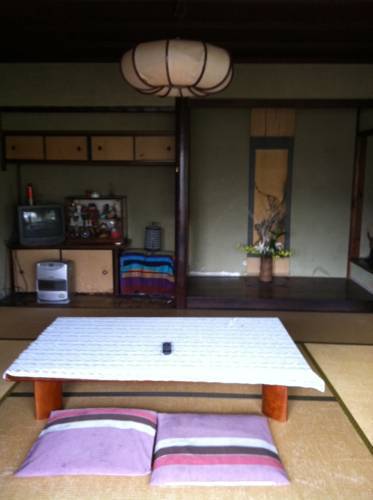
The bedroom floor is tatami and you sleep on a futon. In this manner, the ryokan is similar to a guest house, however, the quality is far more superior. The bedding is exceedingly comfortable and the room is very quiet. There's a table in the room and your attendant brings in your meals (both supper and breakfast) which feature local cuisine.

Most ryokans have beautiful gardens, sporting activities and public areas for guests to enjoy. They have ofuro which is a common bathing area segregated by gender. Guests are given a yukata or robe to wear. The ryokan is an experience that shouldn't be missed when traveling in Japan. This was unequivocally my preferred choice of lodging and I stayed at a number of them throughout the country. The reception is warm and inviting, and the comfort level can't be beat.

MINSHUKU
A budget version of the ryokan, minshukus are located in towns too small for a hotel or ryokan. They are family run and the equivalent to a European pension hotel or a western style B&B or boarding house. You spend your meals with the other guests and with the family that owns/runs the minshuku.

CAPSULE HOTEL
The capsule hotel is not ideal for someone that suffers from claustrophobia! They resemble a morgue with the capsules stacked side by side and on top of each other. This is a perfect alternative for one looking for a cheap place to stay, without the amenities the bigger hotels afford. These pod-like capsules have free wireless and a t.v. There is a storage locker for your luggage and communal washrooms.  The capsule hotels are optimal for single travelers on a budget.

LOVE HOTELS 

Hugely popular in Japan, love hotels offer a short stay for couples looking for some privacy while engaging in sexual activities. Entrances are discreet, parking is hidden, and there is little interaction with staff. There are no windows to maximize privacy. Couples have the choice of a "rest" or "stay". The rates are based on the hour, and a "rest" lasts 1-3 hours. The "stay" are for couples who spend the night. With more and more of Japan's youth living at home until they marry (if they marry), these hotels offer the privacy a couple needs. Love hotels bring in an annual revenue in the billions.


Hello Kitty...setting the mood. You feeling it? 
The hotels often have a theme. Steps from my apartment was the Shakespeare Love Hotel. Being an English major, I could embrace that. Most hotels have karaoke, baths, rotating beds and condoms on the bedside table. With the "rest" option, these hotels are also used by travelers who need to grab a few hours sleep, but don't want to pay full rates at an expensive hotel.


Big Red
When I returned to Canada, I worked at a hotel for seven years and with that came the benefit of receiving employee discounts. Now that I no longer work at a hotel, I prefer to find accommodations using VRBO (vacation rental by owner) or airbnb. Nowadays, I no longer travel with a backpack or on a budget. I swapped my backpack for Big Red, my suitcase that has four wheels and spins!

I'm fortunate to have had the opportunity to travel around Japan and stay at a number of places. I could have stayed at Holiday Inn's, but traveling is about braving the new and unknown. The various accommodations added to my overall Japanese experience and I couldn't have asked for better lodging while traveling there.

~MT

Thursday, 15 September 2016

The Big One

Growing up in Canada, the closest I came to a natural disaster was The Great Blizzard of '78. We got to stay home from school, toboggan around the neighbourhood and play in the streets since there was no traffic. The next Great Blizzard hit in '99. Again, hardly a conundrum. Food and alcohol could still be delivered as long as you shovelled a path to your front door. We took the opportunity of being snowed in for three days to binge-watch TV shows. Not much different than a typical winter really. I had no idea how diverse Mother Nature would be when I moved to Japan; a country notorious for earthquakes, tsunamis and typhoons.

Soon after settling into my new town of Shizuoka, I visited the Earthquake Disaster Prevention Centre to ensure I was armed with the necessary information and skills to keep myself safe. There was a simulation room to experience what a quake would feel like, and a tsunami theatre. I learned about seismologists, magnitudes, Eurasia and Philippine Sea plates; things I was previously unacquainted with. The staff repeatedly mentioned The Big One, referring to the Tokai Earthquake. A major earthquake was predicted to hit the Tokai area in the near future with a magnitude of at least an 8.0. The quake which was expected to kill thousands wasn't the only concern. The 100-foot waves from the tsunamis caused by the quake, would destroy the very city in which I now lived! I was now officially worried.

The trip to the Centre was educational. One thing I had learned at a young age from my Girl Guide Leader was to always BE PREPARED. I had to get an emergency kit put together with enough supplies to last 72 hours. I packed a bag and waited. And waited. Then waited some more.

An earthquake can happen anywhere and at anytime with no warning. You could be at work, riding the train, singing at a karaoke bar, or in the bath. One of the first quakes I felt was in an underground bar where I sat drinking beer with other English teachers. It lasted a short time, and it barely made a gap in our conversation. We were in a safe location being underground and our night carried on.

After living in Japan for a while, I started to feel less fearful of the quakes. I had experienced a handful of smaller ones and they weren't as scary as I thought they would be. I would play Tori Amos' Little Earthquakes and sigh with relief that I avoided The Big One once again. When my cousin Kenny came for a visit, he got to experience a small earthquake. He was rattled but other than the light fixture swinging a bit and some dishes rattling around in the cupboard, it was almost unnoticeable. Most people in the city wouldn't have known there was a quake until they watched the evening news. That all changed on a night in April of 2000.

I had just drifted off to sleep sometime around midnight when I was suddenly jounced awake. My light fixture was swinging violently above my bed, my wooden bedroom doors were rattling loudly, and I was being bounced around in my bed. I felt like Linda Blair in The Exorcist as my bed lifted me not only up and down, but shook me side to side. My heart jumped in my throat and I froze. I thought for sure this was The Big One and that I would perish in my 5th floor apartment with no means of escape. I could hear sirens blaring from the street below and decided to take action. Thoughts raced through my head as I frantically tried to remember what I had learned at the Earthquake Centre.

I jumped out of bed, flipped on my light, and searched for my eyeglasses. Unable to find them, I cursed my terrible vision and grabbed the next best thing; my prescription swimming goggles. I donned my emergency kit, thanked God I slept in my bra and decent pajamas, then remembered my pet turtle.
Mi-chan
I couldn't leave Mi-chan behind to fend for himself. Although the earthquake didn't even cause him to stir from his sleep, I grabbed his container and food and bolted for the door where my neighbours (two fellow Canadians) were knocking.


Opening my bedroom door, I ran smack into my fridge that had shook clear across the kitchen floor. Stepping around the fridge, I simultaneously heard and felt the crunch under my feet. I looked down to find most of my dishes and glassware broken and scattered all over the kitchen floor. I stepped cautiously to the front door and unlocked it.

When I opened the door, my neighbours found me carrying my turtle, wearing my emergency pack, and swimming goggles. Their fear was immediately squashed by this vision and they burst into laughter. I couldn't find the humour just yet as my heart was still beating frantically in my chest. The tremors had stopped but I knew there would be aftershocks and possibly a tsunami. That was sure to follow after such a big quake.

My neighbours came inside and we carefully stepped around the broken glass and made our way into my living room. My books and plants were scattered all over the floor. Luckily my TV was still standing. After calling around to friends to make sure they were all right, we turned on the news to discover the earthquake had hit the city centre (where our apartment building was located) with a magnitude of 5.3. Then on a smaller scale, the aftershocks began. No tsunami and no injuries. Figuring we were going to live but wouldn't be able to sleep, I swapped my goggles for my contact lenses, and we headed to the bar down the street.

After that night, I kept shoes beside my bed and my eyeglasses on my headboard. A few months passed and I was able to fall asleep without thinking or worrying about The Big One. I had learned from my mistakes. I was prepared! My shelves were bolted to the wall or ground to prevent them from knocking over. My kitchen cupboards were much more secure. No more walking into a refrigerator in the middle of the night or stepping on broken glass.

The next quake hit while I was sleeping, much like the previous one. Even though I was scared, I wanted to test my alacrity. I grabbed my glasses, turned on my light, slipped into my shoes, grabbed both my turtle and my bag and ran to the door to let my neighbours in. The trembling stopped. I managed to get to my front door in under 20 seconds. This earthquake was only a 3.5. I was getting better.

Coming from disaster-free Canada, these earthquakes shook me to my core. Thankfully I avoided The Big One while living in Japan, but experiencing natural disasters taught me to appreciate life and what's important. They also taught me to always...always...be prepared.

~MT


Friday, 19 August 2016

The Tragically Hip Roadie


Back in May, the iconic Canadian rock band announced that lead singer Gord Downie was diagnosed with glioblastoma, a form of incurable brain cancer. Since then, fans have been scrambling to get tickets to one of the final 15 shows across Canada to have one last chance to see the band play live; to hear some new songs, some old hits and to bid farewell.

Since the emergence of the Kingston band in 1984, lead singer Gord Downie, guitarist Paul Langlois, guitarist Rob Baker, bassist Gord Sinclair and drummer Johnny Fay,  have been engaging fans with songs about Canadian politics, history and geography. Downie is a true poet; his lyrics deep and dark. Their songs are the soundtrack to growing up in Canada. Every road trip had one or two Hip albums involved. Every campfire had a Hip song. Every jukebox at a dive bar had a Hip song. Most of us have memories of rocking out to the Hip at some point in our life. We can't eat chicken without singing Little Bones.


I tried getting tickets during the Fan Club pre-sale. No luck. Within minutes, scalpers were selling the tickets online at a 2000% markup. The Ticketmaster/StubHub monopoly on concert tickets reeks of collusion. With the demand of these final 15 shows at an all time high, scalpers knew they could make money off every fan wanting to see the Hip one last time. The band then introduced a lottery system which I entered, but much like Lotto 649, didn't win.

Tuesday, August 16th was the final show in Hamilton. The Hip had just played three shows in Toronto so I thought my chances for getting a ticket might be better. My brother Gerry and I kept checking online for last minute tickets and there were some...for $600. I couldn't justify spending that much knowing the face value of the tickets. Late afternoon, we decided to jump in the car and head to Hamilton (280 km or 173 miles from Windsor) even without tickets in hand. Hitting the 401 while listening to the Hip's latest album, Man Machine Poem, we prayed we'd get tickets.

Arriving outside FirstOntario Centre in Hamilton with an hour left before the show, my spirits started to dip. There was a throng of people in the streets out front, grabbing up merchandise, wearing In Gord We Trust t-shirts. Street musicians were playing Hip songs, and you could hear Hip music blaring from speakers up and down York Boulevard. The energy from the crowd was palpable and we knew we had to get inside. Checking with the box office, we were told what we already expected...the show was completely sold out. They weren't releasing any more tickets which left us with one last option-a scalper.

I was leery at best. How could you trust the tickets would be legitimate? There were a lot of police milling about and I wasn't sure on the legalities of buying from scalpers. They didn't appear to be hiding from anyone, standing on the corner and yelling, TICKETS, so we approached one of them. He was offering upper bowl seats behind the stage for $700. We moved on.

After talking to a few different scalpers, we found a guy that had two tickets in the lower bowl, 7th row. After a bit of negotiation, with only 30 minutes until the show started, we settled on a price (all the money I had in my pocket) and we were in!                                                          


Locating our seats, we couldn't believe our luck. Our seats were amazing! Taking the chance, driving almost three hours without tickets to what would be the last show we would see our favourite band perform live was worth it. The lights dimmed, the crowd got to their feet cheering, stomping their feet, chanting HIP! HIP! HIP! while waving Canadian flags and hankies, a tribute to the enigmatic frontman Gord, who always performs with a hanky tucked into his pants. The feeling was exhilarating.


The band came on stage and the first thing you noticed (besides Gord's magenta suit and fedora!) was how close their set was. Creating a tight circle, reminiscent of the band playing small venues, they launched into At the Hundredth Meridian followed by Courage. The crowd went wild and we all felt the same way. Downie has shown unbelievable courage and bravery in the face of his illness, deciding to tour one last time for his fans and for his band. Downie joked they had played in Hamilton years before to a crowd of zero. He couldn't remember the name of the bar. Now selling out to a crowd of more than 18 000, the love for the Hip couldn't be denied.

At times the concert was bittersweet. During Grace, Too, Gord sings armed with skill and determination, and grace, too. Hearing him sing the final line of Scared, I got to go, it's been a pleasure doing business with you hit home for the crowd. After 25 songs and almost two and a half hours of an incredible performance, watching him blow a kiss, offer up a peace sign and a thank you to the fans, brought tears to my eyes. Gord simply said, "thank you Hamilton, see you later". Most of us realized we wouldn't be seeing him again. This would likely be the last time we'd see the band perform live.

The final show is on Saturday, August 20th in their hometown of Kingston. CBC (Canadian Broadcasting Corporation) has agreed to air the final concert. From coast to coast, the entire country will be watching and singing along with The Tragically Hip. Gord has taught us to live in the moment. No dress rehearsal. This is our life. And we will all be living in the moment with these five guys from Kingston, spending a Saturday night listening to their songs and feeling what it means to be Canadian. I know I will be shedding a tear or two. The lyrics to Done and Done are most fitting at this time:
Done and done
Night accomplished
If I had a wish
I'd wish for more of this

If you get the chance, tune into the CBC to celebrate The Tragically Hip. 

~MT

Wednesday, 10 August 2016

KitKat

Produced globally by Nestle, (with the exception of U.S. licenced under Hershey), the KitKat chocolate bar has been enjoyed my many globally. Most can quote the catchphrase, "have a break...have a KitKat". The U.S. jingle "give me a break, give me a break, break me off a piece of that KitKat bar" is just as catchy. This two or four fingered, creamy milk-chocolate wafer candy bar has been around for 80+ years and now comes in a variety of flavours.

KitKat is the most popular confectionery treat in Japan. Pronounced Kitto Katsu, this translates to 'surely win'. Nestle has introduced more than 200 flavours over the years, including soy sauce, wasabi, green tea and ginger ale. The bars are made to pay tribute to the unique foods and flavour of Japan but to most foreigners, they seem strange. Some regions in Japan have their own signature flavour sold only in that part of the country. My sister thought it would be a fun idea to introduce some of the bizarre flavours to my nephews, so she ordered some Japanese KitKats on-line and captured it all on video.

For the past couple of years Andrew (aged 11) and Zachary (aged 9) have been making YouTube videos (check them out on their channel A2Z TV). Their previous videos include them judging various types of french fries, beaver tails (an Ottawa favourite), ketchup, Oreo cookies and Lays potato chips. Sampling eight different flavours of Japanese KitKats would be their latest venture.

The flavours:

 • Green Apple 🍏                                 • Matcha (green tea) 🍵
 • Cheesecake                                       • Raspberry
 • Sake  🍶                                             • Wasabi
 • Azuki (red bean)                              • Yakimo (sweet potato) 🍠


The first thing the boys noticed was the packaging. Both the writing and the pictures were strange. Most things in Japan are described as kawaii which translates to cute or adorable. In advertising, the Japanese will often add cartoons or pictures that are kawaii to draw in their customers. Even my ATM card had a Little Bob Dog cartoon on it. Kawaii is a term used often, describing everything from Hello Kitty to household items. The market is no longer geared towards teenage girls; people of all ages embrace the kawaii phenomenon.


Upon opening the packages, my nephews were surprised by the colour of the chocolate bars. In Japan, the colour reflects the flavour. Both green tea and wasabi were green in colour, raspberry was pink and sweet potato was yellow. The boys are used to chocolate bars being brown, with the exception of Zach's favourite Hershey's Cookies 'n' Creme which is white.
                           

Having never tasted green tea, wasabi, sweet potato, or azuki,  Drew and Zach did considerably well. They feared they'd become intoxicated trying the sake flavour, but after being assured there was minimal alcohol in the tiny bar, they agreed to try it. Green apple, cheesecake and raspberry flavours were what they expected, but not their favourites. The wasabi bar smelled like horseradish which is not a smell you'd normally enjoy with chocolate. You can taste the heat, yet it's strangely delicious.

Zachary and Andrew


You can watch their video by clicking here.

Top 3 picks:

Zach: Sweet potato, sake, wasabi
Drew: Green apple, wasabi, azuki


Both boys hated the cheesecake and raspberry KitKats. Perhaps their palates are ready for some natto (a gross fermented bean dish) or sashimi. I was pleasantly surprised they embraced this taste test with as much gusto as the french fry challenge.

If you ever find yourself in Japan and needing a break, enter the nearest konbini (convenience store) and pick up a KITTO KATSU. Just be careful of the flavour you choose!

~MT